
For our history spine, I chose to replace H.E. Marshall's This Country of Ours with H.A. Guerber's The Story of the Thirteen Colonies. We have been reading Guerber's books since way back when we studied Ancient Greece and they have never disappointed. We actually began this one last year, as the founding of most of the original 13 colonies fell into the time period of the reformation, and will finish it at the end of our second term, coming up in just 4 weeks(!). I really enjoy Guerber's writing style, and so we will begin with The Story of the Great Republic in term 3, and on into next year.
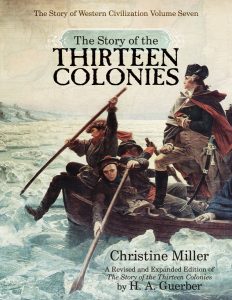
I would have loved to find some original publications of these, since you know how I feel about vintage books, but at the time I could not. I hesitated to buy these versions from Nothing New Press because I knew them to be edited, but the wonders of the internet allowed me to view Christine Miller's entire preface in which she carefully explains which changes (and why!) she has made. After that, I bought with confidence, and as I said, have not been disappointed.
Next up are Genevieve Foster's books, George Washington's World, and Abraham Lincoln's World. If you came here from Instagram (I'm @bibliobites, hello!) you might have seen me declare my love for GW's World a couple weeks ago. These books have been on my radar for many years now, but I had not managed to work them in before, and now I regret all that time lost, when we could have been friends, lol! While there is plenty of American history in here, I chose these books primarily for the presentations of what else was going on in the world during this time period. I might have continued with The Struggle For Sea Power, from M.B. Synge's fabulous Story of the World series, as we read the previous three books in as many years, but again - I really wanted to use Foster's books, they're just that good. Honestly - I wish I could have used them all, but that would have been overkill and redundant.
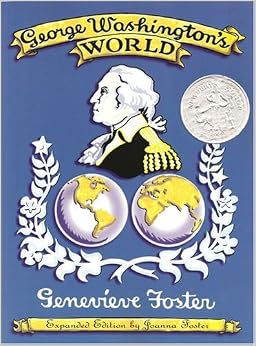
Another note about older editions vs new: You'll notice I have the "expanded editions," published by Beautiful Feet Books, in which Genevieve Foster's daughter, Joanna, has added more stories to her mother's original text. I have not done an in-depth comparison, but a friend recently found a (vintage hardcover!) version of GW's World, and it appears to me that what Joanna has done is round out the conversation by adding the voices of some Native Americans and African-Americans, as well as a few more discoveries and inventions. Overall, I feel the additions definitely added to the book's appeal, though I wish I could get the newer editions in hardcover, my paperback is already looking worn!
Oh, and again, we spread GW over two terms, and will do the same with Lincoln, carrying him over into our next school year.
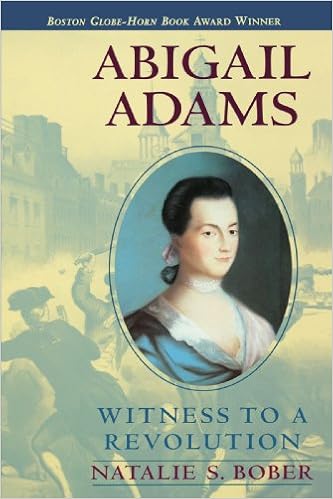
Abigail Adam: Witness to a Revolution - I'll begin by saying I've not read more than a few lines of this. Maybe I should have, because it is the book my children complain about the most. However, it seems that their complaints are mostly about how 'unfair' they think the Adams' lives were: "it's like they're not even married!" "He's been away for THREE YEARS!" Which, of course, cannot be helped. And yes, I tired to help them see what a sacrifice it was for the greater good, and that we need people like that - so that the rest of us can stay home cozy and safe. Not sure they bought it, but I tried. I also like how this is one of the more academic and 'grown-up' books that we've used thus far, and important transition as my teen nears high school. We're nearing the end of this book, and will begin Of Courage Undaunted soon.
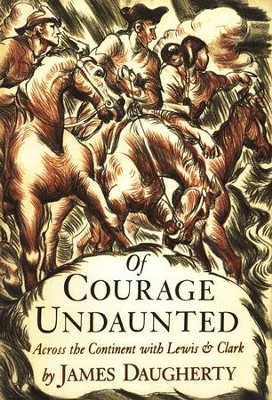
Of Courage Undaunted is the story of Lewis and Clark, of course. Honestly, there are so many good books out there about Lewis and Clark, but that's a discussion for another post. I chose this one this time for two reasons: 1. I like the cover art, and 2. AO had already scheduled it out, saving me the trouble of doing so. However, I DID enjoy Daugherty's The Magna Charta, and these same students gave great narrations from his Poor Richard last year, so I felt like this was a pretty safe choice. Safe and pretty: win-win.
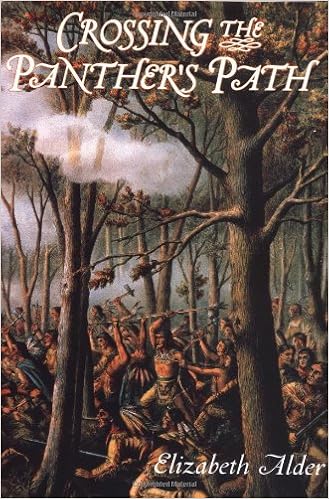
Since historical fiction is probably my favorite genre, we are constantly reading it over here. Last year, when we studied the Renaissance, I was able to read aloud a whole list of great historical fiction to enhance our learning. This year, we wanted to read the Lord of the Rings Trilogy, which is wonderful, but I *do* feel like we're missing so many great books we could be reading about this time period. However, I did assign a few, as you may have noticed in the very first picture. My son is reading Johnny Tremain, In Search of Honor, and Crossing the Panther's Path, one per term, respectively,

Johnny Tremain is on nearly every booklist there is, so I'll not waste too much time here, other than to say - it's definitely worth your time. In Search of Honor is a story of the French Revolution, and it turned out to be better than I expected. It has a clear Christian message, but did not feel fake or forced. It has been several years since I read Crossing the Panther's Path, but I remember being totally enthralled when I did. It's the true story of Billy Calder, a boy of British and Mohawk decent, and educated by French Jesuit missionaries, who joins Tecumseh and his band as they attempt to regain control of their homelands. Another story full of honor and bravery, and facing difficult choices with integrity.
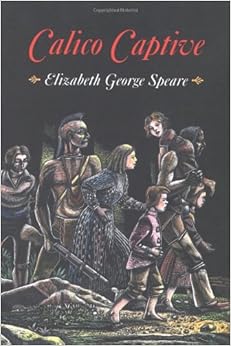
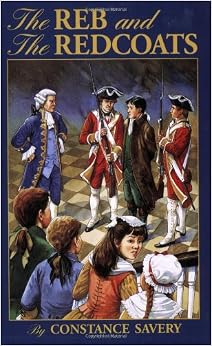
My daughter recently finished Calico Captive, and begun The Reb and the Redcoat. The former is sometimes overshadowed by Elizabeth George Speare's more well known titles, The Bronze Bow, The Witch of Blackbird Pond, and The Sign of the Beaver. I'm not really sure why, as it is just as well done as any of those. I like that, like The Reb and the Redcoat, it shows familiar events from a point of view not often presented in children's literature from American authors. I had a hard time choosing between Calico Captive and Lois Lenski's Indian Captive, so I let my daughter choose, and she was happy with it.
And I think that's it! I hope to share what my younger children are reading for history this year, and well as what my older ones are doing for other subjects, because it's really fun and helpful to me, but I also have very modest hopes that it may one day be helpful to someone else. So stay tuned!

