Pages

Thursday, August 3, 2023

Considering Chemistry


Well, I had more preliminary things that felt like they needed saying, but Instagram overwhelming voted to Get On to the Books, Already! So here we are. I will just say that following multiple streams of science in the high school years requires a little forethought, not just about which books to use, but how to schedule them, i.e., don't leave all the hard ones for the same year, or overload one year with too many pages worth of reading and not enough time for observation, experimentation, and notebooking. Even if you decide to utilize textbooks, there is no rule that says they must be completed in year or, indeed, that they have to be completed at all. But we'll get those in a bit. Also, definitely do not take it that your student should read *all* the books in this post for a Full Credit of Chemistry or some such silliness. I'm just trying to help people choose by giving options and discussing a few pros and cons. 

If you'd like to follow a more living book approach, there are lots of options, so I'll touch on the few I'm most familiar with here: 


First up is Crucibles: The Story of Chemistry, I have the updated fourth edition, by Bernard Jaffee. This book is subtitled From Ancient Alchemy to Nuclear Fission, and as suggested, it tells the history of chemical discovery through biographical chapters of scientists and discoverers. It is the most systematic coverage of chemistry of the books listed in this post, and yet it is still very readable. This is a fantastic way to learn - through the stories of real people who had real triumphs as well as real failures. It is somewhat similar to The Mystery of the Periodic Table, written for adults. 
The chronological organization helps the reader slowly build up chemical knowledge and vocabulary. This is a very "CM" title; it is interesting and engaging, and it would be a good fit for a child willing to put in the work of extracting the important concepts, and lends itself well to narration. The main downside is the lack of illustrations or diagrams in the book, so supplementation is needed, as well as lab work, if one wanted to make a lab course using this book as the spine. 


Napoleon's Buttons: 17 Molecules that Changed History by Penny Le Couteur. If you're familiar with Ambleside Online you'll recognize this book as part of their Year 8 science curriculum, but it too is definitely high school level. My eldest three children and myself all enjoyed this book, it is a great living title, covering an interesting mix of science and history, explaining the chemistry of the commonplace. However, when it came to my fourth child, she read a couple chapters over a term before declaring to me that she "didn't understand it, and hadn't learned one thing." A little more probing and we discovered that she did not have the foundation necessary to understand it - she had little concept of atoms and almost no idea of bonds and molecules. It is true that she had read The Mystery of the Periodic Table just two years before in AO year 6, but it seemed she hadn't given that book the attention it was due either. We paused Napoleon and chose a short text to fill those foundational gaps, but all that to say - you might want to make sure your student is prepared for this book if you choose to include it in your school. This title definitely deserves a pre-read, or at least a perusal of the possible problem areas, which Ambleside Online has so helpfully noted here.


That's the Way the Cookie Crumbles: 62 All-New Commentaries on the Fascinating Chemistry of Everyday Life by Dr. Joe Schwarcz. This is an even more "popular science" title than the last and may be a good fit for students whose interests lie elsewhere than in the sciences, but who still need either a wide feast spread before them, or a requirement met.  Conversely, perusal of this book might inspire a student's interest in something they hadn't previously considered and spark new love for chemistry. The biggest downside to this book, in my opinion, is that it is only loosely organized; however the chapters are short and the reading easy, devoid of technical jargon. I have only skimmed this title, and that not recently, so I cannot speak to any inappropriate/objectionable material, and therefore I recommend pre-reading it first, as there may be things to note for discussion or skipping.


Uncle Tungsten: Memories of a Chemical Boyhood by Oliver Sacks. An enjoyable memoir that highlighted the ways Sacks' curiosity and interest in science led him to experiment with and understand the nature of many common elements and chemicals. I felt much respect for his parents while reading this, for the ways in which they both encouraged his interest, and (mostly) tolerated his blowing stuff up. Interspersed with his own life, he highlights the discoveries of scientists like Davy, Dalton, and Curie. This is a great title for picking up important scientific concepts effortlessly. 

There are two things to note in this title: Sacks occasionally gets off track writing. In chapter 19 he describes his first org*sm (at a young age, randomly by himself in a pool). In chapter 22 he casually mentions how his mother (in a midwifery capacity) occasionally drowned disabled/malformed newborns. For sensitive readers, these chapters could both be skipped without detriment to the overall story, but for mature readers, I highly recommend this title. </>


Finally, I want to suggest Theodore Gray's fantastic trio of books: The Elements, Molecules, and Reactions. Again, if you're familiar with AO's Year 6, you might recognize The Elements, but don't let its placement, or the plentitude of photographs fool you - this book (and the other two) was written for adults. In The Elements, Gray looks at each of the 118 elements in turn and discusses their properties, their common (and uncommon) forms, and how they are most often used (or not). There's also a short section at the beginning of the book about the format of the periodic table and how it got that way, that acts as a helpful primer. The second book, Molecules, explores (according to the jacket flap): "the most interesting, essential, useful, and beautiful of the missions of chemical structures that make up every material in the world." But you'll learn some scientific concepts here too, if you wish: he begins with a discussion of how atoms bond to form molecules and compounds, and organic vs. inorganic chemistry. Gray then goes on to explore soaps and solvents, goops and oils, rocks and ores, smells and colors. Parents should be aware that Gray purposely addresses drugs (legal and illegal), sweeteners (natural and artificial), and controversial compounds. Again, this is an adult book, and some of his comments may be unsuitable for younger students, and you may not agree with his conclusions on opioids, Splenda, thimerosal, or CFCs. I recommend pre-reading, at least those sections of most concern. Reactions, the final book, is a recent acquisition of mine, and as such I've not had the time to peruse is very thoroughly, but it purports to demonstrate how molecules interact and change in essential ways, while explaining such chemical concepts as energy and entropy, and how time affects all. In all three books, Gray's enthusiasm for his subject shines through, and I feel like a student could learn a lot more from these books than from your average chemistry text.  Though the same could probably be said about all the books mentioned here today. 

Sidenote: my son will (most likely) be reading Molecules and Reactions, along with Drawing Physics and some labs/experiments/demonstrations for a high school credit of Physical Science. Just thought I'd mention it in case that option appeals to someone else as well. Remember that if your students are looking to apply to college, they will probably need to show some type of lab credit. This doesn't have to be as hard as it sounds! But that's a topic for another post. 

ETA: None of these links are affiliate links - I make absolutely no money off this masterpiece of a blog, lol. They are simply there for your ease - to quickly get a bit more info about a book. I ALWAYS recommend shopping around, buying second hand, and supporting small businesses. <3 


Thursday, June 15, 2023

An Introduction (but not of me)

So, I'm hoping no one glances at the sidebar and notices that my last post was over six years ago. On second thought, maybe that's not such a bad thing if you believe that in that time I've been here learning, growing, and teaching, and generally so immersed in those things that I've simply not had the wherewithal to share about it. In that time, I've graduated two daughters from our homeschool, and my first-born son is a rising senior. In addition to him, this fall I will also have two other high schoolers and two middle schoolers. And I guess I feel compelled to preface with all this to say: here are my qualifications: only that I am doing it and have been doing it and will continue doing the hard work of homeschooling my children, through high school or as long as the Lord leads me to. I don't have degrees in teaching, or curriculum writing/design, but - yay?- I'm also not trying to sell you anything, so you can rest easy on that front. I don't even have any affiliate links to turn this into a side hustle. I just came here to talk about high school science in a longer format than Instagram allows, which is where I usually throw out my ideas.  

As aforementioned, I don't have any expertise. What I do have is 20 years of reading Charlotte Mason, some experience raising humans, the help of the Holy Spirit, and a lot of books. For all of our homeschooling years we have used (the free!) Ambleside Online curriculum. I am not going to gush about how much I love it (though I could) because that's not the purpose of this post (or, Lord willing, series of posts). It is simply to say that we have been completely happy with how full and rich and deep an education it is, and I am constantly thankful for all the work and love and prayers that have been poured into it. If it has one fault it is this: their high school science is still a work in progress. 

This frustrated me at first; then I thought, guess I'll have to do something myself. Well, I have been working on it for the last five years too, and I'm still not sure I have anything worthwhile. But I have suggestions based on some principles and considerations, and THAT, my friends, is what I came here to share. 

I must begin with the fact that the principles that apply to choosing a science curriculum for Form IV, V, and VI students (high school) are the same ones that apply to choosing curriculum in any subject, for any aged student. Charlotte Mason set forth 20 Principles of her Educational Philosophy and they can be found in each one of the six volumes she wrote, as well as with just a few keystrokes in your favorite internet browser. Children are born persons (even hormonal teens), whose minds feed on ideas, and which minds are capable of dealing with all proper knowledge. Children (and teens) should therefore be encouraged to cultivate relationships with a vast number of things and thoughts, through physical exercises, nature lore, handicrafts, science and art, and living books; a wide and generous curriculum should include a variety of these living books which communicate knowledge in well chose language. And finally (for this discussion), students should be able to reproduce what they have learned in some way, either orally, as a written narration, or in what is especially useful as pertaining to science: keeping notebooks. 

And that's the basics. In chapter 10 of book two of Philosophy of Education Charlotte Mason gives details and examples of what a full and various science course might look like for older students. What stood out the most when I first read it was the way students continued to study what we might call 'streams' of science. PNEU students had multiple readings each term in such subjects as physiology (human anatomy), geology, physical science (including chemistry and the laws of physics and electricity), biology, botany, ecology, and astronomy. They also did "a good deal of field work," believing that "the only sound method of teaching science is to afford due combination of field or laboratory work, with such literary comments and amplifications as the subject affords;"  the principle being "that children shall observe and chronicle, but shall not depend upon their own unassisted observation," much in the same way that older students enhanced their Bible curriculum with readings from commentaries. 

You can see, then, that high school is also not the time to give up on or let students off of the nature study and journalling they did as younger students. Nature journals have "recommended themselves pretty widely as travelling companions and life records wherein the 'finds' of every season, bird or flower, fungus or moss, is sketched, and described...The nature notebook is very catholic and finds room for the stars in their courses and for, say, the fossil anemone found on the beach." 

"Certainly these note books do a good deal to bring science within the range of common thought and experience; we are anxious not to make science a utilitarian subject," which brings us to the final principle (of this post): "We offer children knowledge for its own sake," so that their characters might be built up from within. While training toward a specific vocation or goal is certainly an option of many home educators, it should not necessarily be a deciding factor in our curriculum; rather we are to "equip pupils for LIFE" (emphasis mine). I know the beauty of this idea is one of the things that first drew me toward Charlotte Mason's philosophy, and I don't believe that needs to be set aside simply because our children have college or careers looming ahead. I'll leave you with one last quote:

"Now we must deal with a child of man...as a child of God, whose supreme desire and            glory it is to know about and to know his almighty Father; as a person of many parts and        passions who must know how to use, care for, and discipline himself, body, mind, and           soul: as a person of many relationships, - to family, city, church, state, neighboring states,    the world at large: as the inhabitant of a world full of beauty and interest, the features of        which he must recognize and know how to name, and a world too, and a universe, whose        every function of every part is ordered by laws which he must begin to know."


PS: I know I'm using quotes without citations in text or otherwise, but I haven't bothered with those in over 20 years, and I don't intend to begin again now. If you're interested, everything from this post was taken from volume six: A Philosophy of Education, mostly chapter 10, but not all. 

PPS: I also know I just wrote an entire long post as a big block of text, with no sweet graphics or photos, but bear with me, those are coming. Well, the book pics are coming, fancy graphic design probably never will. 

Thursday, March 16, 2017

Anno's China

Guys, a super exciting thing happened to me the other day: the lovely people from Beautiful Feet Books contacted me (on Instagram, follow them, and me - @bibliobites) and asked if I would like to review their newly released picture book, Anno's China. This makes me feel like I'm some big time blogger or reviewer, instead of some little old nobody SAHM who is doing this for the first time! But shh! Don't tell them that I don't know what I am doing, and maybe they will send me more books!

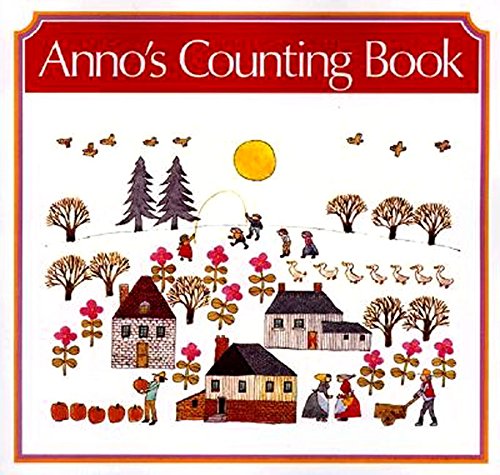
Image result for anno's counting book

I was introduced to Mitsumasa Anno some years ago by MommaofMany who was appalled - appalled, I say - to find that I was not familiar with his work. I have obviously learned better since then, and am now the happy owner of Anno's Counting Book (part of my preschool curric, more on that later!), Anno's USA, Anno's Italy. Anno's Magic Seeds, and Anno's Medieval World, besides China. While the "geography" or country books are my favorites, I think Anno's China is fast becoming my new favorite, and I will tell you why.

Image result for anno's china

First, I will say that I was almost disappointed when I pulled this book out of the envelope, because although it was a hardcover with crisp new dust jacket, it seemed to me that everything seemed a bit fuzzy, like when my home printer needs to be aligned. China did not look the same as the other books I owned. And I was surprised, because I actually own an abundance of  publications by Beautiful Feet Books and have never felt their quality to be lacking before. Then I remembered that the illustrations were SUPPOSED to be watercolors, which OF COURSE have a fuzzy, ethereal quality to them, by virtue of the media. Which made me wonder why Anno's other books, by other publishers look like they were illustrated in children's markers. I am not here to run anyone else down, all the books are lovely, but - this one by BF books may be a more accurate representation of the artist's original intentions.

But enough about that, here's the real reason why I love this book so much, are your ready for this? It has an index or appendix explaining what you're seeing in each scene! I know, right? But maybe you're not familiar with Anno's books, and if so, let me explain.

Image result for anno's USA

Anno's country books are wordless picture books, wherein Anno (always dressed in blue, with a pointy cap) journeys across a geographic area such as the Italy or the United States, and sometimes across time. There's an amazing amount of detail, but sometimes, unless you know what you're looking at, you don't know what you're seeing.

When I first pulled this book out of my mailbox, I thought, let me sit down an look at it real quick. Oh boy. You'd think I would have known better, right? There is no "quick look" with Anno's books. As soon as I opened it, I was drawn in- the beginning scenes were so calm and peaceful and I recognized men fishing with cormorants, like we'd learned about in Ping! But soon I began to feel a little frustrated. I could recognize that the author was taking us up river, but I wondered if this was a famous village I was supposed to recognize? What were those people doing? What did *that* mean? I simply did not know enough about Chinese culture and traditions to appreciate all that this book contained.
Image result for anno's china

But then, THEN, my friends - I found the index. The lovely, 9 page index, PLUS an author's note, that carefully explained each scene, without becoming tedious, and still leaving much for the reader to discover on their own. This is the ONLY one of my Anno books that has this feature, which leads me to believe it is something that Beautiful Feet put together, or included, though it is written from the author's point of view; and it is, in my opinion, what makes this book amazing instead of only great, and definitely worth having. When I'm finally finished oogling it, my next step is going to be to figure out where I can fit it in to my curriculum...

*As aforementioned, I received a complimentary copy of this book in exchange for my honest review. I have received no other compensation. Links to Amazon are not affiliate links, I receive no monies for recommending good books to y'all, I just like to see people reading. ;)

Monday, March 13, 2017

Early American History - intermediate

Usually as I'm preparing for the beginning of our school year, I write up a post about what our plans are and what books we'll be doing. Mostly to help me keep it all straight in my brain, but also because I get so excited about new books and all the amazing things we're going to be learning! Well, I never got around to doing any of those posts for this school year, but now that we've just passed our halfway mark, I think I shall. I'd like to do a series of posts, in no particular order, starting with this one here; What my Year 5 and Year 7 students (ages 10/11 and 12/13, respectively) are currently reading for history. In general, I start with Ambleside Online and then tweak it to fit our family. This is loosely based on Year 4, but because my students are older than the intended audience, we've decided to condense the year's history readings into 2 terms, then begin Year 5 in our final term.


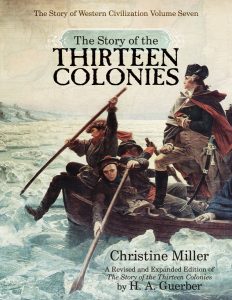
For our history spine, I chose to replace H.E. Marshall's This Country of Ours with  H.A. Guerber's The Story of the Thirteen Colonies. We have been reading Guerber's books since way back when we studied Ancient Greece and they have never disappointed. We actually began this one last year, as the founding of most of the original 13 colonies fell into the time period of the reformation, and will finish it at the end of our second term, coming up in just 4 weeks(!). I really enjoy Guerber's writing style, and so we will begin with The Story of the Great Republic in term 3, and on into next year.

The Story of the Thirteen Colonies

I would have loved to find some original publications of these, since you know how I feel about vintage books, but at the time I could not. I hesitated to buy these versions from Nothing New Press because I knew them to be edited, but the wonders of the internet allowed me to view Christine Miller's entire preface in which she carefully explains which changes (and why!) she has made. After that, I bought with confidence, and as I said, have not been disappointed.

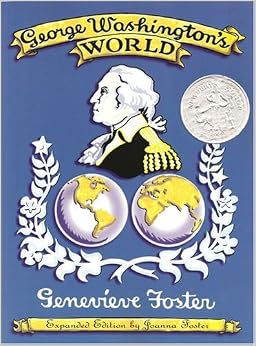
Next up are Genevieve Foster's books, George Washington's World, and Abraham Lincoln's World. If you came here from Instagram (I'm @bibliobites, hello!) you might have seen me declare my love for GW's World a couple weeks ago. These books have been on my radar for many years now, but I had not managed to work them in before, and now I regret all that time lost, when we could have been friends, lol! While there is plenty of American history in here, I chose these books primarily for the presentations of what else was going on in the world during this time period. I might have continued with The Struggle For Sea Power, from M.B. Synge's fabulous Story of the World series, as we read the previous three books in as many years, but again - I really wanted to use Foster's books, they're just that good. Honestly - I wish I could have used them all, but that would have been overkill and redundant.

Image result for george washington's world

Another note about older editions vs new: You'll notice I have the "expanded editions," published by Beautiful Feet Books, in which Genevieve Foster's daughter, Joanna, has added more stories to her mother's original text. I have not done an in-depth comparison, but a friend recently found a (vintage hardcover!) version of GW's World, and it appears to me that what Joanna has done is round out the conversation by adding the voices of some Native Americans and African-Americans, as well as a few more discoveries and inventions. Overall, I feel the additions definitely added to the book's appeal, though I wish I could get the newer editions in hardcover, my paperback is already looking worn!

Oh, and again, we spread GW over two terms, and will do the same with Lincoln, carrying him over into our next school year.

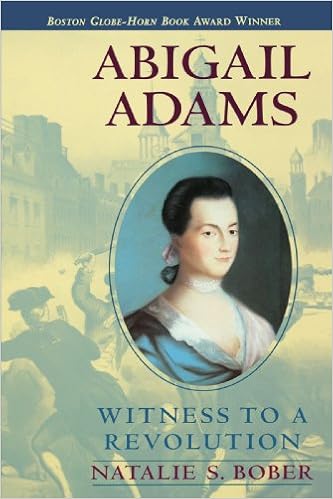
Abigail Adam: Witness to a Revolution - I'll begin by saying I've not read more than a few lines of this. Maybe I should have, because it is the book my children complain about the most. However, it seems that their complaints are mostly about how 'unfair' they think the Adams' lives were: "it's like they're not even married!" "He's been away for THREE YEARS!" Which, of course, cannot be helped. And yes, I tired to help them see what a sacrifice it was for the greater good, and that we need people like that - so that the rest of us can stay home cozy and safe. Not sure they bought it, but I tried. I also like how this is one of the more academic and 'grown-up' books that we've used thus far, and important transition as my teen nears high school.  We're nearing the end of this book, and will begin Of Courage Undaunted soon.

Image result for abigail adams witness to a revolution

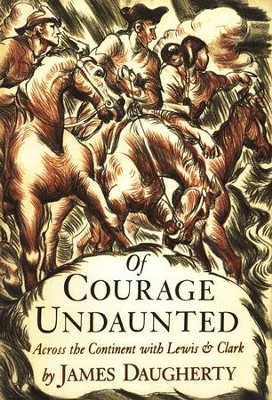
Of Courage Undaunted is the story of Lewis and Clark, of course. Honestly, there are so many good books out there about Lewis and Clark, but that's a discussion for another post. I chose this one this time for two reasons: 1. I like the cover art, and 2. AO had already scheduled it out, saving me the trouble of doing so. However, I DID enjoy Daugherty's The Magna Charta, and these same students gave great narrations from his Poor Richard last year, so I felt like this was a pretty safe choice. Safe and pretty:  win-win.

Related image

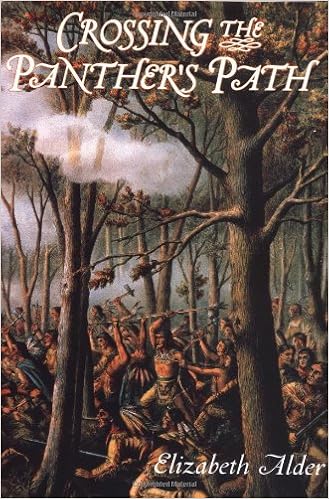
Since historical fiction is probably my favorite genre, we are constantly reading it over here. Last year, when we studied the Renaissance, I was able to read aloud a whole list of great historical fiction to enhance our learning. This year, we wanted to read the Lord of the Rings Trilogy, which is wonderful, but I *do* feel like we're missing so many great books we could be reading about this time period. However, I did assign a few, as you may have noticed in the very first picture. My son is reading Johnny Tremain, In Search of Honor, and Crossing the Panther's Path, one per term, respectively,

Image result for in search of honor book

Johnny Tremain is on nearly every booklist there is, so I'll not waste too much time here, other than to say - it's definitely worth your time. In Search of Honor is a story of the French Revolution, and it turned out to be better than I expected. It has a clear Christian message, but did not feel fake or forced. It has been several years since I read Crossing the Panther's Path,  but I remember being totally enthralled when I did.  It's the true story of Billy Calder, a boy of British and Mohawk decent, and educated by French Jesuit missionaries, who joins Tecumseh and his band as they attempt to regain control of their homelands. Another story full of honor and bravery, and facing difficult choices with integrity.


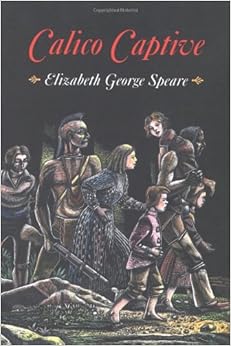
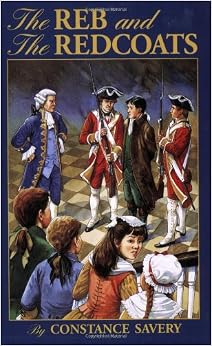
My daughter recently finished Calico Captive, and begun The Reb and the Redcoat. The former is sometimes overshadowed by Elizabeth George Speare's more well known titles, The Bronze Bow, The Witch of Blackbird Pond, and The Sign of the Beaver. I'm not really sure why, as it is just as well done as any of those. I like that, like The Reb and the Redcoat, it shows familiar events from a point of view not often presented in children's literature from American authors. I had a hard time choosing between Calico Captive and Lois Lenski's Indian Captive, so I let my daughter choose, and she was happy with it.

Image result for calico captive book                            Image result for the reb and the redcoats

And I think that's it! I hope to share what my younger children are reading for history this year, and well as what my older ones are doing for other subjects, because it's really fun and helpful to me, but I also have very modest hopes that it may one day be helpful to someone else. So stay tuned!

Wednesday, March 8, 2017

Vintage Musings

As I gathered up the pile of books that had represented most of Monday's school, it struck me just how many of the titles we were reading were older, vintage, and - in some cases, fragile- tomes. In most cases, perfectly new printings, all smooth and shiny, are readily available. So why so many old books? 


Well, frugality for one. Our home library has grown over the years from a couple hundred books to currently over 3,000. I couldn't have done that while paying the Manufacturers Suggested Retail Price. So instead I shop second hand and thrift stores, and find books for a dollar or less. Plus, it's good for the environment - the more books we re-use, the less that end up in a landfill, and the less demand there is to print more (I hope). Anyway, save money and the world - win-win.

And what began as a way to save money has now become a super fun way of life. When you walk into a store that sells used books you never know what you're going to find - it's a treasure hunt! Maybe nothing, but maybe a book you've wanted for years, that's been really hard to find, and here it is just sitting in this bin, minding it's own business, and you grab it and look around to make sure no one saw it too, and when you go to pay you feel like you're stealing when they ask 75 cents for it, and you can't help but giggling and thinking, if only you knew!  


I found this complete Book of Marvels at a used book store for $1 once! True story. 


Third (was I counting?), buying vintage books allows you to commune with books that may have been long out of print. Sometimes our curriculum intentionally uses these, but sometimes I come across a book that just looks interesting or friendly, and I have to bring it home, I bought A Child's Geography of the World (pictured above) with it's companion volume A Child's History of the World at our library books sale, for maybe $4 for the matching set. While the latter is easy to come by, the former has been out of print for some time. And yet here I am, owning a perfectly sound copy that has quickly become one of our favorite books. 

It's also fun to imagine where vintage books have been before you. My sweet mother-in-law bought me the book you see on the top of the stack there - a collection of Eugene Field poems - I had fallen in love with his poetry, but did not enjoy reading them online, as I had been. I knew the book was old, but I was not prepared for the inscription I found inside. Can you read it there, in the picture above? It says: 
For dear little Eric with 
love from his "Gran muddie"
on his 8th birthday - 2nd Oct 1898

1898! Can you believe it?! Almost 120 years ago! And that "Granmuddie" would have lived in the time of Dickens! Tennyson! Queen Victoria! Tchaikovsky! DH and I had fun wondering what path it took after it left little Eric's hands - who took such good care of it, that it lasted this long? And why? Was it given up willingly, or unwillingly? Had it been treasured, or left to collect dust, forgotten on a shelf? I'll never know, but it's worth pondering of a half hour. 


And finally, which was the point I came here to make, but got sidetracked by all the other points, vintage books just  make me feel more than newer books can, that I really am communing with great minds, joining the great conversation, learning from what so many before me have learned from. Can you read the same exact text in a newer printing? Of course. But it doesn't feel the same. Hey, I didn't say it was a rational point! 😃 

Well there you have it: Five Reasons To Love Vintage Books. Do you have another you'd like to add? A favorite vintage copy? I fun story about a great find? Please share in the comments! 

Thursday, July 7, 2016

Year 4 science

Last year when I was planning our upcoming lessons, I challenged myself to create a science curriculum with what I had on hand. It was fun to do, and as we are now winding up our school year, it has occurred to me that I chose pretty well, and so I thought I'd share.

Spring and Summer and Fall and Winter in North Carolina Forests 


I've wanted to use these books in our school for along time, but I always chose Burgess books instead. But these were an excellent way to sort of "force" nature study, because so many of the plants and animals could be found right in our yard, so that as we read about them, we also went out to go see them, as much as possible. I liked that these books covered not only birds and mammals, but some reptiles and amphibians, as well as plants, mushrooms, and even discussed a bit of astronomy and geology. Spring and Summer has 33 chapters, and might have done well enough for the whole year, but I liked the other book so much as well that I squeezed both into our 36 weeks. The chapters were an easy read for our ten year old son, were illustrated nicely, and were written from a Christian point of view (published by Rod & Staff). I suspect that even though it SAYS North Carolina, any one living in the Appalachian areas of Virginia, Tennessee, and South Carolina would find it useful.  


The Friar Who Grew Peas, Snowflake Bentley, and The Boy Who Drew Birds


Next I wanted to include some biographies of naturalists and biologists. I actually purchased the Audubon one, because I'd wanted it forever, but I had the others on hand already. For some students three might have been enough, but I chose six for this year, 2 each term, or one every 6 weeks. If you're not familiar with these picture book biographies, please become so. Each one is a true living book, with a wealth of ideas easily dished up, and beautiful to behold.

Listening to Crickets, John Muir: My Life with Nature, and George Washington Carver


These three biographies are short chapter books, and I included them mostly to 1, keep my boy busy, in a good way, and 2. introduce him to naturalists whose works he would very soon be reading on his own. They did the job, but no need to rush out and buy them.

A Drop of Water, and How to Think Like a Scientist 


Finally, I wanted to include these two books because I just liked them so much. Drop of Water is an amazing book of photography that will inspire you to look a little more closely at a substance that covers 70% of our planet. It also encourages readers to "wonder why" and guides them through a few simple experiments in order that one might see for ones self. Think Like a Scientist is a great first logic book, which is somewhat of a pet subject for me. It is so important to me that my children learn to think logically and soundly, to discern strong evidence from weak, and to argue fairly. My son will not study logic formally for a few years yet, but this book is a great introduction.  


His "work" included nature notebook entries, biography narrations, and the suggested activities from the latter two books, and I think we had a pretty successful year. Check back soon for notes on what is in store for him in Year 5!

Sunday, July 3, 2016

Shakespeare for kids

I have a secret: I don't read Shakespeare to young children.

Now some of you are like, I don't read Shakespeare at all! And I hear that. But in some homeschool circles, my little confession might seem very shocking. But I don't teach Shakespeare to grammar level/form I/II/III /elementary age students, and I will explain why.


So the Bard: Plot line: net very original, nothing special. Star crossed lovers, the Bad Boys of history, bottom line, he was looking for things that would make a good show, not trying to influence the course of the English language for centuries to come. That was just a happy coincidence. Besides, his plays were written for adults, and such, contain adult themes.


 No, the real reason to read Shakespeare is for the language, for his way expressing human emotion and feeling.  Words and phrases invented by Will are still in use today. And even though y'all know (or should know!) that I'm all about reading vocabulary-rich literature to children, there's a time and a place for everything. And the time for deciphering brilliant-but-archaic-poetic language is, in my opinion, not until age 12, at least. High school for some students.


Sure, you could read any of the many wonderfully done children's adaptations, but without the language, what's the point? Would you really be reading that story if it had any other name on it than William Shakespeare? 


Despite this belief, we have, as you can see, a fair amount of the Bard's plays in picture book format. In fact, this one (published by Candlewick) is one of my children's favorites. And I like them because even if you're an adult, it's incredibly helpful to have some prior knowledge of the plot before you dive into the original plays. If you're a visual person, having some illustrations can help you keep characters straight. Plus, they're just kinda fun :D Although my daughter tells me I should warn you that all the people in William's book have "kissy lips." ;D  


Thursday, June 16, 2016

Summer Reading List (sort of): Kid Lit

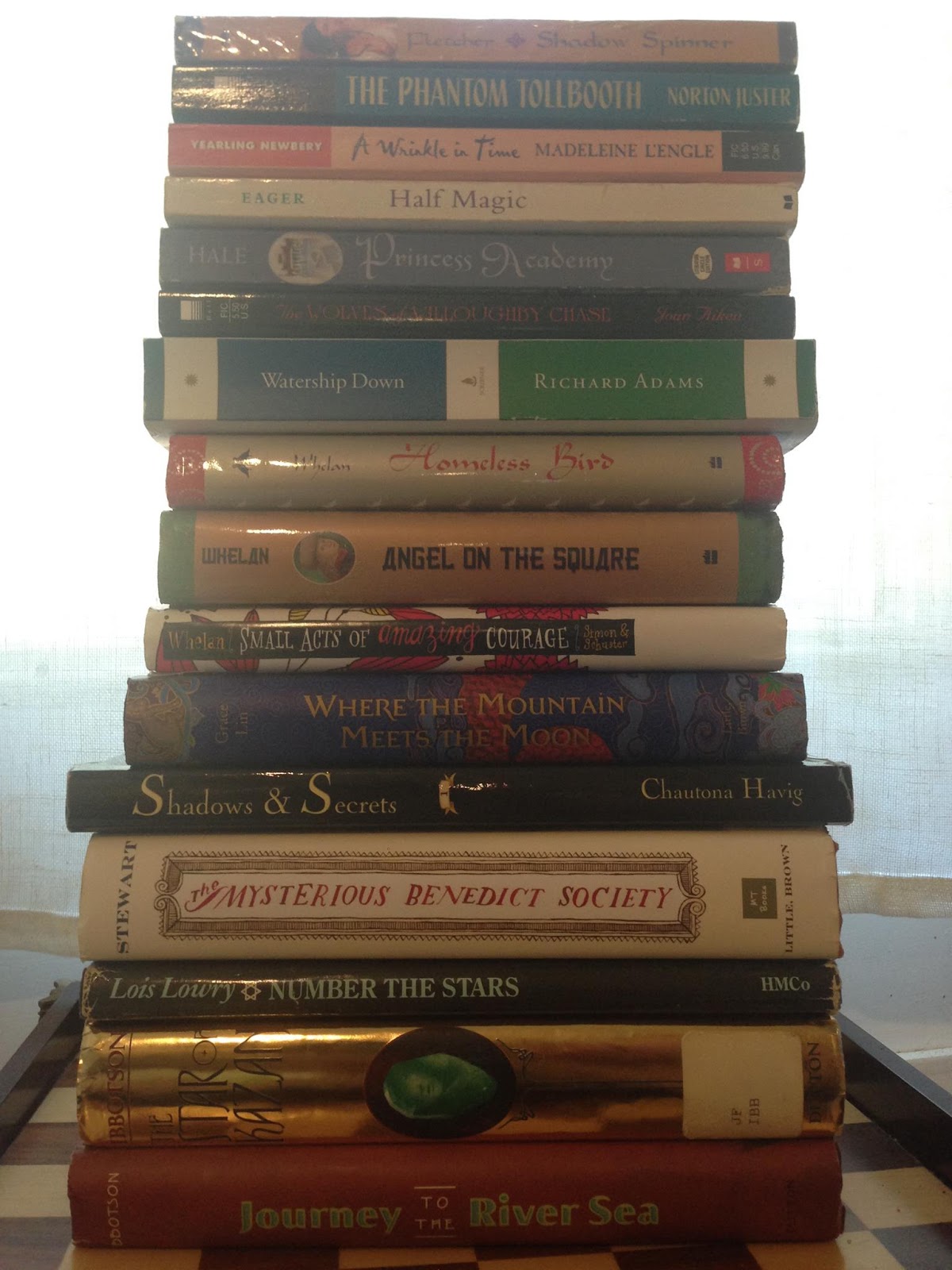
The other day a 10 year old friend asked my almost-14 year old daughter for book recommendations, and this is what my daughter pulled out. I found her choices interesting, and her list a good one, so I thought I'd share it. It's that time of year when all my favorite book bloggers, as well as every public library, is coming out with a Summer Reading List. Well, life is busy, so this is about as close to that as you're going to get from me. List below, with Amazon links (remember, I am not an affiliate).


(top to bottom)
Shadow Spinner - by Susan Fletcher
The Phantom Tollbooth - Norton Juster
A Wrinkle in Time - Madeleine L'Engle
Half Magic - Edward Eager
Princess Academy - Shannon Hale
The Wolves of Willoughby Chase - Joan Aiken
Watership Down - Richard Adams
Homeless Bird - Gloria Whelan: Daughter would like to say that this is her favorite of Whelan's books.

Angel on the Square - Gloria Whelan: I can't recommend this one enough. It's actually the first in a series of four books about 4 generations of a Russian family in St Petersburg/Leningrad, though all the changes and upheaval that took place from the time of the last tsar, to the fall of the Soviet Union.

Small Acts of Amazing Courage - Gloria Whelan: Can you tell we are Whelan fans? If you like this one, don't miss the sequel, All My Noble Dreams and then What Happens.

Where the Mountain Meets the Moon - Grace Lin: Another don't miss is Lin's Starry River of the Sky, a companion volume that can stand alone. I think I enjoyed it more than Mountain, though both books are simply beautiful.

Shadows & Secrets - Chautona Havig: DD says: read the whole trilogy! 
The Mysterious Benedict Society - Trenton Lee Stewart
Number the Stars by Lois Lowry: If I had a Top Ten List of Children's Books, this one would be on it.
The Start of Kazan - Eva Ibbotson
Journey to the River Sea - Eva Ibbotson: If you read one of these, you will want to read everything of Ibbotson's: I don't recommend that, lol. But definitely read these two!

Come to think of it, I'm due for a re-read of at least five of these - I think I know what I'll be doing this summer!  What do you think - see anything you think you will read this summer? Or recommend to someone you love? Or any of your favorites? Do tell!

Monday, May 16, 2016

Medieval literature


So in continuation of an older post, in which I discussed a few books about the Middle Ages for middle schoolers, I thought I'd talk about some literature selections about the same, for the same. I don't feel it necessary to ALWAYS correspond EVERYTHING we read to our particular time period, but often times there is key literature that I wouldn't want to miss.

The Legends of King Arthur are just such. Whether you believe in a historical Arthur or not, the legends surrounding him and his noble knights have for centuries represented western civilization's ideals of integrity, bravery, and virtue. Furthermore, any well written version of the tales will raise important issues for discussion; topics like the responsibility of the rulers toward the ruled and the consequences of sin. As with Greek mythology, a familiarity with  the stories brings greater depth of understanding to almost anything else you will read in the English language.

And like Greek mythology, translations and retellings of Arthurian legends abound. It is not the intention of this post (or any future one, likely) to try to cover or compare all of them, but I will discuss the three I am most familiar with, in the hopes that I might be helpful to someone.

King Arthur and his Knights of the Round Table by Roger Lancelyn Green - of the three I've listed, this is probably the most accessible, easy to read version. Twenty-two chapters beginning with the boy Arthur pulling forth the sword from the stone, and ending in the culmination of events which the death of King Arthur brought about. 

The Story of King Arthur and his Knights by Howard Pyle- I absolutely love Pyle's storytelling, and the beautiful ways in which he uses language. Here is an excerpt we recently came across:
For when a man is king among men, as was King Arthur, then he is of such a calm and equal temper that neither victory nor defeat may cause him to become either unduly exalted in his own opinion or so troubled in spirit as to be altogether cast down into despair....Yea, he who is a true king of men, will not say to himself, "Lo! I am worthy to be crowned with laurels;" but rather will he say to himself, "What more is there that I may do to make the world better because if my endeavors?"    
It may be helpful to note that Pyle's book does not cover the fall of Camelot or Arthur's death.

The Age of Chivalry by Thomas Bulfinch - This would be a good option for the child who is a strong reader or that has a keen interest in Arthurian legends. There is easily enough material in Bulfinch's version to constitute an entire (school) year's worth of readings.

Stay tuned for my next post, where I will cover Chaucer and Ivanhoe, and possibly Shakespeare! And tell me, what is your experience with King Arthur? Are you a Sir Thomas Malory aficionado, or is it Disney's Sword in the the Stone all the way?

Also, check out my new Instagram account (and follow me!), @BiblioBites, where I will be posting pics and thoughts about some of my favorite books on a (near) daily basis!


Monday, August 3, 2015

Renaissance and reformation: literature and free reads

We don't always coordinate our literature selections to the history period we are studying in our homeschool, but as our students get older it happens more frequently. This year, I have chosen two main novels of enduring literary and historic value for my Year 8 student to read. It is my hope that the rich vocabulary will proffer a vivid picture of the times and places described, and that each will speak truths about human nature, and of the relationship between God and man.  


Westward Ho! by Charles Kingsley - If ever a book gave a flavor of the times, this is one. Set in Elizabethan England, the ins and outs of 16th century religion, politics, and warfare all come into play in the hero Amyas Leigh's life. Amyas sails and explores, fights Spanish invaders in Ireland, and in the end, gets the girl; his integrity and faith guiding him through it all.


I Promessi Sposi (The Betrothed) by Alesandro Manzoni - another book that is new to me, Amazon had this to say about it: " The Betrothed's exploration of love, power and faith presents a whirling panorama of seventeenth-century Italian life and is one of the greatest European historical novels."

(Both of the above books are also available free in Kindle or ebook format.)

And because I can't keep my daughter in books, I have also added these rather easier reads to her schedule this year: 
The King's Fifth by Scott O'Dell (1541) - recounts the adventures and trial of Spanish mapmaker Julian Escobar in the New World. So good, truly.

The Explorations of Pere Marquette by Jim Kjelgaard (1670) - okay, this is actually a non-fiction title, from the much acclaimed Landmark Series; this book recounts the travels of French Jesuit Marquette (and his friend Joliet) as they explore the Mississippi river and environs.

A Parcel of Patterns by Jill Paton Walsh (1665) - I picked up this small volume one night and could not put it down until the last page. Based on the true story of how the Plague devastated the English village of Eyam, it is a haunting story of love and loss, but also a thoughtful look at the convergence of religion, politics, and science in the 17th century. 


And because my 4th, 6th, and 8th grade students are all studying this same time period, I have chosen a few books to read aloud that we can all enjoy, though every book on this list would make an excellent free read choice as well. All are appropriate for younger children as well, though they may find The Black Arrow a bit dull.  

The Black Arrow by Robert Louis Stevenson (1460-61) Set during the War of the Roses, young Dick Shelton finds himself betrayed by his treacherous guardian, and torn between conflicting loyalties with the houses of York and Lancaster, as he seeks to become a knight and rescue his lady love. Truthfully, this should have been a part of last year's studies, but hey  - I can't always get it perfect.

The Hawk That Dare Not Hunt by Day by Scott O'Dell (early 1500s, during the reign of Henry VIII) - while his uncle is merely out for profit, young smuggler Tom Barton sees that the writing of one Martin Luther, and William Tyndale's hopes of an English Bible, are changing the lives of English men and woman and ushering in the dawning of a new age.

Unknown to History; The Captivity of Mary of Scotland by Charlotte Yonge (1567) - it seems that every British child knows the story of Mary, Queen of Scots, but if I ever learned it, I've forgotten it. Through the story of the Talbot family and their foundling daughter, Cicely, we read here of Mary's captivity and her conflicts with Queen Elizabeth I.  (available free for Kindle or ereader)

Red Hugh, Prince of Donegal by Robert C. Reilly (1580) -  an exciting and adventurous tale based on a true story from Irish history - that of Red Hugh's capture, imprisonment, and escape from his Elizabethan English enemies. A story of bravery, loyalty, and perseverance.

 I Will Adventure by Elizabeth Janet Grey - (1596) - I randomly picked up this out-of-print book at a sale, and am glad a did. A quick and easy read, the story follows Andrew, who is sent from his home in Canterbury to become a page to his London uncle, but what he really wants is to be apart of the exciting theatrics of Mr. Shakespeare.  

The Children of the New Forest by Frederick Marryat  (1647) -  Set in England during the time of the Civil War, four children, whose royalist father was killed fighting for King Charles, flee their burning ancestral home, and take up residence with Jacob Armitage, a keeper in the New Forest. An exciting and detailed look at a very volatile time. 

Master Cornhill by Eloise Jarvis McGraw - (1666) Full of detail about life and customs in 17th century London, this story centers around Michael, orphaned during the great plague, and left to fend for himself in the city. He befriends a balladeer, a map maker, and his lively housekeeper Susanna, but that only seems to make it worse once the Great Fire sweeps through London, threatening them all...

The Witch of Blackbird Pond by Elizabeth George Speare (1687) - 16 year old Kit finds it difficult to adjust to life with her uncle's family in Puritan Connecticut, after growing up in sunny Barbados. The colonists, in turn, have a hard time understanding her different ways, especially after she befriends a Quaker woman that is already regarded as a witch. I originally intended to assign this book in Term 3, but decided instead to read it aloud to all my children - I believe everyone from the 7 to 13 year old will enjoy it, and I don't doubt the younger children will pick up more than I expect!
Disclaimer: I am NOT an Amazon affiliate. Clicking the above links will get me nothing. though it may give you helpful information :)

Tuesday, July 28, 2015

Renaissance & Reformation History


I've been deep in planning mode for the 2015/16 academic year for many moons, and now have all our books chosen, scheduled, and (mostly) bought. We mainly follow Ambleside Online and my oldest daughter will be doing Year 8 this year. Two years ago, we began our study of world history with the ancient Hebrews, Greeks, and Romans; last year we delved into the middle ages, and now Eldest Daughter (and two of her younger siblings) will be exploring the tumultuous years of 1400s - 1600s - the time of European Renaissance and Reformation. As always, I'm excited about the books we'll be reading this year (I mean, if I wasn't, I wouldn't be using them!) and would like to share them with you, along with a little bit about why each was chosen. I'm even MORE excited about the public-domain primary-source documents that Ambleside has included in their YEAR 8 schedule. I can still hear one of my college professors waxing on about how significant primary source documents are, and how important it is to base any real research on them, and I am so glad the AO advisory took the time to dig up and include them in middle and high school history studies. I'll probably not go into them too much here, so be sure to check them out in the Year 8 link above.

The New World - Churchill 
This will be our main text, or spine, for this year. This book is the second volume in Churchill's four volume set, A History of the English Speaking People. We read the first volume this year, and even though my daughter found it a little dry, I feel that it's well done and important enough to stick with. So to help it go down a little easier, and to round out our studies, I am also assigning

The Story of the Renaissance and Reformation - H.A. Guerber and Christine Miller
 I may or may not have mentioned this before, but I love Guerber's writing. LOVE. And if I had an infinite amount of time and a lot more money, then I would buy her Story of the English and the Story of Old France, and pick and chose my favorite chapters to assign, throwing in a few from Marshall's A History of Germany (which I DO own). But really, what would be the point, when Christine Miller has done it all already, and thrown some helpful maps in, in the bargain? My daughter and I are really looking forward to this book.


The Voyage of the Armada - Howarth
The first of three non-fiction titles we will be reading during the year, these are not boring textbooks! this one recounts one of the seminal events of this period in history - from the Spanish point of view. I was hooked after the first few pages. 

Homes in the Wilderness - Margaret Wise Brown
Yes, THE Wise Brown of Good Night, Moon fame! It was a little surprising to see her name as editor of this collection of pilgrim journals from William Bradford and others, but this important document was only helped by Brown's updated spelling and Mary Wilson Stewart's simple illustrations. 

A Coffin for King Charles - Wedgewood

I've not read this book yet, but it is said to be a well researched account of one of the most shocking events in English history - the trial and execution of King Charles I, written in magnificent prose.

You can learn a lot of history through the well told story of one person's life. To this end, we will also be reading these biographies this year:

A Man for All Seasons - Bolt
A two act play about the Lord Chancellor who refused to compromise and was executed by Henry VIII.
                Utopia - After reading ABOUT Sir Thomas More, we'll also be reading this classic work          BY him, which, though not strictly a book of history, nonetheless had historical value. 
 
The Life of John Donne - Izaak Walton


Please note, the above link is NOT to an Amazon book listing, but to an online text from Project Canterbury, a "free online archive of out-of-print Anglican texts and related modern documents."
This short selection has the distinction of being written a contemporary of Donne's, and includes excerpts from many letters written by the latter.


Galileo's Daughter - Sobel 
I read this years ago, and while it was occasionally a bit slow, for the most part it is a fascinating look at the Medici's Florence and the mythic "father of modern science," through correspondence with his daughter, the nun Maria Celeste.

Did you notice that I didn't mention a few of the books pictured? We'll get to literature (including poetry!) and free reads in my next post.


And once again, please remember that I am NOT an affiliate with Amazon or anyone else. Any links provided are simply for reader ease, I currently receive no compensation for keeping any part of this blog. :)


Monday, July 27, 2015

Early American history with historical fiction

I was cleaning my desk and found a list I had scribbled out when someone asked me about living books for early American history. And, because I must have been in a fastidious mood that night, I even arranged the books in chronological order. It's too good of a list to just throw away, and I will lose it in a heartbeat if I try to save it, so I am posting it here for all posterity. Know too, that for purposes of this list I defined "early American history" roughly as the time from Columbus to about the year 1800. 

Pedro's Journal by Pam Conrad  (1492-93) the fictional diary of a ship's boy on Columbus' vessel  Santa Maria.

Walk the World's Rim by Betty Baker (1527+) A 14-year old Indian joins Cabeza de Vaca's expedition through the Southwest.

Conquista! (1541) - an early chapter book about a young native American who encounters his first horse.

The King's Fifth by Scott O'Dell  (1541) - recounts the adventures and trial of Spanish mapmaker Julian Escobar in the New World.

The Lost Colony of Roanoke (1587) - a non-fiction title from Jean Fritz, recounting the mystery surrounding one of the earliest attempted colonies in the New World. 

Landing of the Pilgrims by James Daugherty (1620) - One of the highly esteemed Landmark Books, tells of the coming of English Puritans to Plymouth.

The Scarlet Letter (1642) - an excellent  literature selection for older students, this powerful psychological novel explores themes of sin, guilt, and redemption in the early Massachusetts Colony.


The Explorations of Pere Marquette (1670) - another non-fiction Landmark title, this book recounts the travels of French Jesuit Marquette (and his friend Joliet) as they explore the Mississippi river and environs. 

The Witch of Blackbird Pond (1687) - 16 year old Kit finds it difficult to adjust to life with her uncle's family in Puritan Connecticut, after growing up in sunny Barbados. The colonists, in turn, have a hard time understanding her different ways, especially after she befriends a Quaker woman that is already regarded as a witch.

Madeline Takes Command (1692) - with her parents away, 14-year old Madeline is left to defend a fort on the St Lawrence River against an Indian attack.


Om-kas-toe (early 1700s) -fictional tale of the Blackfeet tribes first encounters with the horse.

Amos Fortune, Freeman - Spanning the whole of Amos' life, from 1710 to 1801, in which he is kidnapped in Africa and sold into slavery in Massachusettes, where he dreams of and plans for freedom for 45 years.

Indian Captive (1743) -well done fictionalization of the story of Mary Jemmison, who is captured in a raid as a young girl, and lives out the rest of her life with the Seneca Tribe.

Calico Captive (1754) - more engaging historical fiction, recounting the trials of Miriam Willard, who is taken from her home in New Hampshire during a raid, and sent to Quebec during the French and Indian Wars. 

The Last of the Mohicans (1754-1763) - paints an excellent picture of frontier life and struggles that made up the French and Indian War, this a must read for high school students. And though I don't often recommend adaptations, THIS ONE is particularly good. 

Sign of the Beaver (1768) - 13 year old Matt faces teh task of guarding his family's new cabin in the wilderness bravely - until a wandering stranger steals his gun and leaves him feeling vulnerable. But a friendship with Attean, a boy of the Beaver clan, teaches him more than just practical survival skills.

A Light in the Forest (1769) - not just another story about a white boy living with Indians, this well crafted story explores the ways in we create any identity for ourselves.


Johnny Tremain (1773) -Bitterly disappointed over an tragic accident that ended his days as an apprentice silversmith, Johnny finds that his new job as a dispatch rider brings him in contact with Boston patriots and the excitement that leads up to the Boston Tea Party and the Battle of Lexington.


Early Thunder (1774-75) - a 14 year old boy who has been raised as a royalist begins to questions his loyalties as the event of history unfold in Salem, Massachusettes.

The Cabin Faced West (1784) - a simple story of life on the Pennsylvanian frontier, with a fun cameo by George Washington himself.

The Reb and the Redcoats (1779-80) - An interesting look at the American Revolution, as told from the point of view of a British family who takes in an American prisoner of war.


Thursday, July 23, 2015

Year 1.5

Last fall, when my daughter was 6 1/2, I started formal lessons with her. She was more than ready, so in addition to Teach Your Child to Read in 100 Easy Lessons, Italic Handwriting, and math, we did Ambleside Online's Year 1. My son, who is my daughter's faithful sidekick in most things, had just turned 5 and was NOT ready for Year 1, and so we did Year 0 with him. I kept both schedules as light as possible, for my own sake, because the addition of these two children meant I was teaching 5 different students/grades in our little homeschool and well, yeah. There are only so many hours, and so much sanity, to go around.    

Anyhow, THIS fall my little guy is ready for Year 1, and in interest of consolidation, ease, and family togetherness, I decided to create a Year 1.5. This way, they can be reading the same books (or rather, be read the same books) in Bible, history, geography, natural history, and literature, without repeating too many of the ones my daughter already did this year. They will still each work at their own level in math, reading, and handwriting. It is also going to allow me to include some books that I either didn't have time for this year, or that I didn't feel we were ready for yet. Then the year after next these two students will move on to Year 2 together, and continue to go forth together in the future. So here's what we'll be doing:

Bible
Ergermier's Bible Storybook - part 2 of 3
                Because we have daily family devotions, I try not to overload our school time with Bible readings. But I love this book and feel that it's a good way for young children to learn these stories. We have stretched this book out over three years (YR 0-YR 2) but other families may prefer to do it all in one or two years.

57 Stories of Saints - I am using this in place of Trial and Triumph, and have only scheduled 2 per term.

Parables From Nature - Two per term. I've not had success with this book in the past, but I am giving it another try. I think it will be a good fit this time. 

History
Child's History of the World - ch 5-41 (skipping ch 37) this year. The more I read this book, the more I like it, and am excited to use it with my littles this year.   

Boy of the Pyramids, Alexander the Great, A Triumph for Flavius, & Viking Tales (also available free for Kindle)

Geography
Paddle-to-theSea - I skipped this with my daughter this year, but I think they are ready for it now.

Natural History
Burgess Animal Book  - one chapter per week     

Literature
Grimm's Fairy Tales  When looking back, I was surprised to find that we haven't covered more of Grimm's tales already. But our Year 0 selections seemed to be mostly Hans Christian Anderson and Perrault, and Year 1 was The Blue Fairy book. I chose only two per term because I am also adding in a few longer stories that I wanted to share with my children. They are:

King of the Golden River, The Velveteen Rabbit, and The Reluctant Dragon

Peter Pan and Pinocchio

(There are so many different versions of these literature selections, that I am hesitant to link to just one. I love lavishly illustrated hardcovers, but there are many less costly paperback versions that are equally nice, especially when you can find one illustrated by the likes of Milne and Arthur Rackham!)

Poetry: A Child's Garden of Verses (Robert Louis Stevenson), When We Were Very Young, & Now We Are Six (A.A. Milne) - yeah, I just read these with my daughter this year, but I love them so much, I'm doing them again. Although, I just now occurred to me that some Edward Lear might not be remiss in Term 2 instead....

And that's it. Pretty simple, but I'm always excited when I get to introduce kids to good book for the first time.

NOTE: I am NOT an Amazon affiliate. I will get absolutely nothing if you click any of these links. I simply include them because I know how much  it enhances *my* blog reading experience, to be able to immediately click and see which book is being referred to.